Wood rot is one of the most destructive and overlooked problems a homeowner can face. It starts quietly, hidden behind a fresh coat of paint or beneath the surface of a deck board, and by the time most people notice it, significant damage has already been done. If you live in Louisville, KY or Southern Indiana, where humidity and seasonal moisture are facts of life, wood rot isn’t a question of if, it’s a question of when.
This guide covers everything you need to know: what wood rot actually is, the types that threaten your home, the serious damage it causes when left untreated, how to identify it early, and most importantly how to fix it the right way.
What Is Wood Rot?
Wood rot is fungal decay that breaks down the structural integrity of wood when moisture and oxygen are consistently present. Wood rot is caused by wood decaying fungi, which include several species that initiate decay by releasing spores.
It is not simply “old wood” falling apart. It is an active biological process, and once it starts, it will not stop on its own. Fungi growth begins when spores land on moist timber, and the fungi attack the cell walls of the wood, breaking down its structure. Fungi thrive in moist, poorly ventilated environments, and in a climate like Louisville’s — with warm, humid summers and wet springs — your home’s exterior and crawl spaces are perpetually at risk.

What Causes Wood Rot?
The single root cause of wood rot is sustained moisture. Fungi require four things to grow: moisture, oxygen, warmth, and a food source (wood). Fungi thrive in damp wood, and both wet wood and dry wood can be affected depending on the type of fungi involved. Remove moisture from the equation and fungi cannot survive. This is why wood rot prevention and moisture control are inseparable.
Common moisture sources that lead to wood rot include:
- Leaky or clogged gutters that direct water toward siding, fascia boards, and window frames
- Failed or missing caulk around windows, doors, and exterior trim
- Improper grading that directs rainwater toward the foundation rather than away from it
- Poor ventilation in attics, basements, and crawl spaces that traps humidity
- Ground contact with untreated wood — a direct invitation for moisture wicking and fungal growth
- Plumbing leaks inside walls or under floors that go undetected for months
- Irrigation systems that spray directly onto wood siding or structural pieces
- Ice dam formation on rooflines in winter that forces water backward under shingles
Temperature and construction practices also play a significant role in creating conditions that either promote or prevent rot, as fungi are most active within certain temperature ranges and poor construction can trap moisture or allow water intrusion.
In Louisville and Southern Indiana, heavy spring rains and the region’s clay-heavy soil, which retains water rather than draining it — create ideal conditions for moisture to accumulate around foundations, decks, and exterior wood. That makes wood rot a perennial threat for local homeowners. Proper construction and environmental controls are essential to prevent rot.
Types of Wood Rot
Not all wood rot is the same. Different species of fungi are responsible for different types of wood rot, and these species can infest wood in various ways. Understanding which type you’re dealing with matters because it affects how the damage spreads, how far it may have already traveled, and how urgently you need to act.
Wet Rot
Wet rot is the most common type and requires consistently high moisture levels (above 50% wood moisture content) to survive. It tends to stay localized to the wet area rather than spreading aggressively into drier wood.
Signs of wet rot:
- Wood that feels soft, spongy, or squishy when pressed
- Dark discoloration — wood appears darker than the surrounding area
- Wood that crumbles or breaks apart easily when dry
- Paint that is bubbling, peeling, or lifting in isolated areas
- A musty, damp odor
Dry Rot
Dry rot is the more dangerous of the two and should be treated as an emergency. Dry rot fungi, a type of brown rot fungi, begin their lifecycle as spores, which germinate and attack the cell walls of timber. Despite its name, dry rot actually begins with moisture but the fungus responsible (Serpula lacrymans) is uniquely capable of transporting water through the wood itself, allowing it to spread into areas that are otherwise dry. It can travel through plaster, brick, and masonry, making it far more aggressive than wet rot.
Signs of dry rot:
- Wood that appears brownish, brittle, and breaks into cube-like chunks
- Fluffy white or gray mycelium (fungal strands) on wood surfaces
- Mushroom-like fruiting bodies indicating advanced spread
- Wood that has shrunk, warped, or cracked in a distinct rectangular pattern
- Spread to adjacent wood that you would not expect to be affected
- Wood infected by dry rot can lead to a widespread infestation that eventually compromises the structure
Brown Rot, White Rot, and Soft Rot
These subcategories describe exactly which components of the wood the fungus is consuming:
- Brown rot attacks the cellulose, leaving the lignin, resulting in dark, crumbly wood that falls apart in blocky chunks. Extremely damaging to structural load-bearing pieces.
- White rot attacks both cellulose and lignin, leaving wood with a bleached, spongy, or stringy texture.
- Soft rot is slower-moving but degrades wood in extreme moisture conditions — often found in decks, fences, and posts in direct soil contact. Certain wood species, such as cedar and white oak, are naturally resistant to these types of fungi due to their durable structure and toxic substances that inhibit fungal growth.
Where Wood Rot Hides in Your Home
Wood rot rarely announces itself in plain sight. It exploits the areas of your home that are most exposed to moisture and least visible during day-to-day life. The most vulnerable areas include:
- Window sills and frames — water collects on horizontal surfaces and degrades paint seals
- Exterior door frames and thresholds — constant exposure to rain, snow, and foot traffic
- Fascia boards and soffits — behind clogged gutters, water backs up and saturates these boards
- Deck boards, joists, and posts — especially where decking meets the board attached to the house, which often require professional exterior handyman repair and maintenance
- Crawl spaces — dark, humid, and poorly ventilated; floor joists and sill plates are prime targets
- Basement rim joists — sit at grade level where moisture from the foundation is most concentrated
- Roof eaves and rakes — exposed to weather and vulnerable to ice dam damage
- Bathroom and kitchen walls — plumbing leaks inside walls go undetected while rot advances and may call for targeted interior handyman repair services
The Real Damage Wood Rot Causes
Left untreated, wood rot does not stay put — it spreads, deepens, and compromises the structural integrity of your home. What begins as a soft spot on a window sill can escalate into a problem that affects your framing, your foundation, and your home’s resale value. Here is what’s actually at stake:
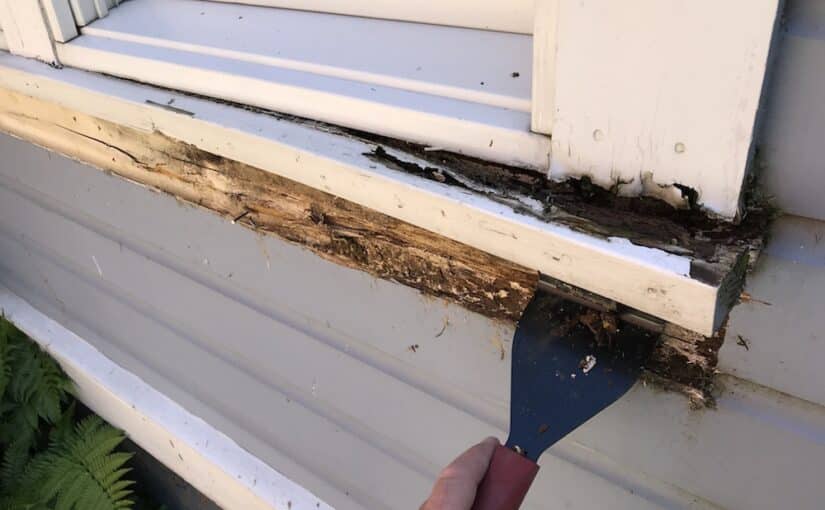
- Press test: Use a screwdriver or awl to press into suspect wood. If the wood feels soft, spongy, or crumbles, it’s likely rotted. If the wood feels hard and resists pressure, it is considered fine and not affected by rot.
- Visual inspection: Look for discoloration, cracking, or crumbling. Also, check for holes in the wood, which can indicate decay or previous repairs.
- Areas to inspect: Pay close attention to wood pieces such as beams, joists, window sills, door frames, decks, porches, and any wood in contact with soil or exposed to moisture. Don’t forget to check any outdoor structures in your yard
- Other signs: Watch for visible fungi growth, spores, or signs of infestation, which can signal advanced wood rot.
Structural Failure
Wood rot eats away at load-bearing components. When the floor joists, beams, sill plates, or wall studs in your home begin to decay, their ability to carry weight is progressively compromised. Floors begin to sag. Walls lose rigidity. In severe cases, structural pieces can fail entirely — a catastrophic and costly outcome that is entirely preventable with early intervention.
Foundation Damage
When rot reaches the sill plate — the horizontal wood that sits directly on your foundation — it can compromise the connection between your home’s structure and its foundation. In crawl spaces, rotted piers, posts, and beams reduce the support beneath your floors, leading to uneven surfaces, sticking doors and windows, and in serious cases, foundation movement. Louisville’s clay-heavy soil already puts homes at greater risk for foundation issues; wood rot in crawl spaces compounds that risk significantly.
Mold Growth
The same moisture conditions that produce wood rot also produce mold. The two problems almost always coexist. Mold in a crawl space or wall cavity is not just a structural concern — it is a health concern, affecting indoor air quality and posing respiratory risks to everyone living in the home.
Pest Infestations
Rotted wood is soft, easy to tunnel through, and attractive to wood-boring pests. Termites, carpenter ants, and powder post beetles are all drawn to decayed wood. A wood rot problem can quickly become a pest problem — and the two together can accelerate structural damage at an alarming rate.
Reduced Home Value and Failed Inspections
When damage is extensive, some homeowners choose to pair necessary repairs with larger home remodeling projects to update spaces while addressing structural concerns.
Wood rot is a red flag for every home inspector and every buyer. If you are selling your home — or planning to in the future — discovered wood rot can kill a deal, trigger renegotiations, or require emergency repairs under tight timelines. Addressing rot proactively protects your investment and keeps your home market-ready.
Escalating Repair Costs
As with any moisture-related issue, hidden wood rot problems that go unchecked can dramatically increase the scope and cost of repairs over time.
This is perhaps the most practical reason to act early: wood rot repair costs scale dramatically with the size of the affected area. A small repair today can become a hefty repair later, if left unaddressed. The rot will not wait. Every season of inaction means more wood affected, more fungi spreading, and a larger bill to restore your home.
How to Identify Wood Rot Early
Early detection is everything with wood rot. The sooner it’s found, the smaller — and less expensive — the fix. Here is what to look for during a seasonal walk-around:
- Press test: Push a screwdriver or firm finger into suspected areas. Sound wood is hard and resists. Rotted wood gives way, feels soft, or crumbles.
- Paint and caulk condition: Bubbling, peeling, or lifting paint on exterior wood often indicates trapped moisture beneath the surface. Deteriorated or missing caulk can allow water to enter, leading to paint failure and potential wood damage.
- Discoloration: Dark staining, blackening, or an unusually bleached appearance on wood surfaces are early visual indicators.
- Texture changes: Wood that looks shrunken, cracked in a rectangular grid pattern, or stringy and fibrous is showing fungal damage.
- Musty odor: A persistent damp or musty smell inside closets, under floors, or near exterior walls is a strong warning sign.
- Fungal growth: White strands, fluffy mycelium, or mushroom-like growths are definitive evidence of active rot.
- Sticky or stiff doors and windows: These can indicate structural movement caused by rotted framing members shifting under load.
Pro tip: Conduct a visual inspection every spring — just after Louisville’s wet season — and every fall before winter moisture sets in. Pay particular attention to anywhere paint has failed, gutters drain, or wood makes contact with soil or concrete.
Wood Rot Repair: What You Need to Know
Wood rot is rarely just a surface issue. It almost always points to an underlying moisture problem, and if that is not addressed, the damage will come back.
Our approach focuses on fixing the cause first, then restoring the damaged areas the right way.
We start by identifying where the moisture is coming from, whether it is failing gutters, roof or flashing issues, drainage problems, plumbing leaks, or trapped humidity. Once that is resolved, we assess how far the rot has spread, including any hidden or structural damage.
From there, all compromised wood is removed back to solid material. Depending on the extent, we either restore the area using durable repair systems or replace sections entirely when structural integrity is involved.
Once repairs are complete, everything is properly sealed and finished to protect against future moisture intrusion.
At Louisville Handyman & Remodeling, we focus on long term solutions, not temporary fixes. The goal is to resolve the issue completely so you are not dealing with the same problem again in a year.
Preventing Wood Rot Before It Starts
The best way to deal with wood rot is to stop it from happening in the first place. Most issues can be avoided with the right maintenance and early detection.
We help homeowners stay ahead of problems by identifying vulnerable areas before damage develops. That includes checking for early signs of moisture intrusion, maintaining exterior sealing and paint, and making sure water is being directed away from the home properly.
We also look at less visible areas like crawl spaces and attics, where moisture can build up over time. Improving ventilation and addressing humidity in these spaces plays a major role in preventing hidden damage.
When repairs or upgrades are needed, we guide you toward more durable, rot resistant materials that hold up better long term.
With regular maintenance and periodic checkups, small issues can be caught early and handled before they turn into costly repairs.
Frequently Asked Questions
What is wood rot?
Wood rot is the fungal decay of wood caused by sustained moisture exposure. Fungi feed on the cellulose and lignin in wood, progressively breaking down its structural integrity until the wood becomes soft, crumbly, and unable to bear load.
What causes wood rot in a house?
The primary cause is moisture — from leaky gutters, failed caulk, poor drainage, inadequate ventilation, plumbing leaks, or wood in direct contact with soil or concrete. Remove the moisture source and you remove the conditions that allow rot to grow.
What is the difference between wet rot and dry rot?
Wet rot requires consistently high moisture levels and generally stays localized to the damp area. Dry rot is more dangerous — it can transport moisture through wood and spread into dry areas, including through plaster and masonry. Dry rot requires immediate professional attention.
Can wood rot spread to other wood?
Yes. Dry rot in particular can spread aggressively through adjacent wood and even through non-wood materials like plaster and brick. Wet rot spreads more slowly and typically stays within the moisture-affected zone — but if the moisture problem is not fixed, it will continue to expand.
Can you fix wood rot without replacing the wood?
For non-structural wood — exterior trim, window sills, door frames, fascia boards — minor rot can be repaired using a wood hardener followed by a two-part epoxy filler, without full replacement. However, structural wood (joists, beams, posts, sill plates) that has been compromised must be replaced entirely. Epoxy is not a structural fix.
How much does wood rot repair cost?
Costs vary widely depending on the extent of damage and the type of repair required. A surface epoxy repair on trim or a window sill may cost a few hundred dollars. Structural repairs involving floor joists, rim joists, or sill plate replacement can range from $1,500 to $10,000 or more depending on how far the rot has spread. Early detection and early repair are always the most cost-effective approach.
How can I prevent wood rot in Louisville, KY?
Louisville’s humid climate and clay-heavy soil make moisture control the top priority. Clean gutters regularly, maintain exterior paint and caulk, ensure proper drainage grading around your foundation, encapsulate your crawl space, and schedule an annual spring inspection to catch issues before they escalate.
Stop Wood Rot Before It Stops You
Wood rot repair is not a problem that gets easier with time. Every season it goes unaddressed, it spreads deeper, costs more, and puts more of your home at risk. Whether you’ve already spotted a soft spot on a window sill or you simply want to know your home is protected, the right move is a professional, trustworthy local handyman assessment.
Since 2002, we have helped Louisville and Southern Indiana homeowners identify, fix, and prevent wood rot — from quick epoxy repairs on exterior trim to full crawl space and structural restorations. Our Project Developers give you a clear, honest picture of what you’re dealing with. Our Craftsmen get your job done right.
Schedule your inspection today at louhandyman.com.