If you’re thinking about remodeling your home, you’ve probably wondered what happens between “we need a change” and the moment it all comes together. Whether it’s a kitchen, bathroom, or full-home transformation, the process is more involved than most expect—but it’s also where the vision starts to take shape.
Kitchens are a great example. What begins as “we want a new kitchen” quickly turns into thoughtful decisions around layout, materials, and how you actually live in the space.
While we’re highlighting a kitchen here, the same intentional approach goes into every remodel we take on, designed to be functional, seamless, and built around you.
At Louisville Handyman & Remodeling, we’ve spent over 20 years refining a home remodeling design process that’s built around your life, your budget, and your vision. This article walks you through every stage, from that first phone call to the day our Craftsmen wrap up and hand the space back to you.
Who Is Behind the Design at Louisville Handyman & Remodeling?
Most design-build companies have designers who focus purely on aesthetics. What makes our approach different is the person doing the designing, and that focus on people and process is part of what we celebrate in our 20+ year reflection. Our lead designer, Denise, started her career as an engineer before spending nearly 20 years co-running a residential construction company alongside her stepfather. She wasn’t just picking finishes. She was running estimates, managing subcontractors, working directly with homeowners on every selection, and keeping the whole business moving. That combination of technical training and real-world construction experience is genuinely rare, and it shows up in everything she does.
When she joined LH&R, she got to narrow her focus to the part she loves most: design. She handles the estimating, the subcontractor scoping, the materials ordering, and the construction documentation that goes to our Craftsmen before they ever step foot on site. The goal of that documentation is simple. She wants it to be clear and complete so that the team can have the information they need to produce a great outcome for our customers.
At any given time, she’s manages all active projects across different stages of design, bidding, and construction. It’s a lot of moving pieces, and she handles it with the kind of calm that only comes from having done this for a very long time, just like the rest of the experienced team at Louisville Handyman & Remodeling.
When Does the Remodeling Design Process Begin?
Your journey starts with a conversation, not a commitment. Here’s how the early stages work:
- Initial Contact: You reach out to us. Our Office Manager takes that first call. She’s listening to understand your project and your goals and will have you send pictures of your project area. She’ll then set up a meet and greet call with our President.
- Meet & Greet Call: Our President will review your pictures and discuss your project with you to determine if we’re the right fit for each other.
- Site Visit: Our President comes to your home, walks the space with you so we can establish a realistic cost range based on what he’s seeing and your vision for your project.
- Design Agreement: If you’re both aligned on the direction and the general investment, you move forward by signing a design agreement and paying a design fee. This fee is typically a small percentage of the overall project cost, with simpler kitchen projects on the lower end and more complex remodels requiring a higher investment.
That design agreement matters for a reason. It’s a signal that you’re committing the funds, time, and energy to partner with us in crafting a real plan to bring your vision to life. It also means we’re committing significant time across our team—meeting with you and coordinating all the details—to develop a thoughtful design and clear costs so you end up with a project you truly love.
One thing worth knowing: the plans belong to you. If you go through the full design and bid process and decide not to move forward with us, you keep the project plans. Ultimately, it’s your project and your home. In practice, very few clients who get to this stage choose to walk away because they can see how their vision will come to life.
What Happens at the First Site Visit with the Design Team?
Once the design agreement is signed, our President (Joe), Designer and Remodel Production Manager comes to your home. Joe has already spent time with you by this point, so this visit isn’t starting from scratch. It’s a warm handoff from someone you’ve already built trust with.
During that first visit, the team:
- Takes detailed measurements of the entire space
- Photographs the existing space from every angle
- Asks questions to understand how you actually use the space today and how you want to use it after the remodel
- Gets to know you as a person, because the best designs come from understanding your life, not just your square footage
That last point is something our designer takes seriously. She’s lived through every phase of home ownership and worked with customers in every stage. She knows what it’s like to want a bar for entertaining when you’re newly married, to desperately need somewhere to stow toys when you have little kids, and to want teenagers in the basement but definitely not in your hair. That lived experience means she can often anticipate what you’ll need before you know to ask for it.
A good example: a young couple came in recently wanting to finish a large basement. They had three children under two and a half years old, and their plans included a wet bar, a TV zone, and a bedroom. They hadn’t left a single square foot for toy storage. Our designer didn’t say a word about it in the meeting. She just designed it in, mentioned it casually when she showed them the plans, and they were thrilled. That’s the kind of thing that only happens when your designer has actually been there.
From there, the vision starts to take shape on paper and the next step is understanding the space exactly as it is today. Here’s where we begin.
📸 Before Photos of a recent Kitchen Remodel Project
This photo shows the kitchen as it existed before a single measurement was taken or a single cabinet was ordered. This is the starting point, and the contrast with what comes next tells the whole story. Make sure to keep scrolling to see the amazing after pictures!

How Is Your Layout Designed?
This is where the fun starts. Our designer begins with exactly what you asked for. Your vision is the foundation, not a starting point she’s going to override. From there, she starts experimenting on her own. She might work through loads of different variations internally before she ever shows you anything. What you’ll see when she presents are usually three strong options, the ones she thinks are genuinely worth your consideration.
You have full creative control the entire time. Her job isn’t to push you toward her favorite. It’s to open up possibilities you might not have seen on your own. She’ll always show you what you asked for. She’ll also say, “Hey, what if we tried this?” And then she’ll mean it when she says your feedback won’t hurt her feelings.
Options tend to follow a natural progression:
- Option A: Exactly what you described. Simple, clean, functional.
- Option B: A thoughtful step up from the original request.
- Option C: A more ambitious take that adds scope in ways that might genuinely improve how you use the space.
The goal is always to give you an outcome that fits your life and your budget, not to sell you something you don’t need. In some cases, that may mean exploring options that go beyond your initial budget to include features you hadn’t previously considered.
What Software Do We Use and What Does It Show You?
We use Chief Architect, professional architectural design software that allows our designer to build precise floor plans, dimensioned layouts, and full 3D renderings of your project before a single cabinet is ordered. Here’s what you’ll actually see when she presents your design:
- Bird’s-eye floor plan: A top-down view showing exactly where every cabinet, appliance, and fixture lands, with real dimensions and traffic flow mapped out
- 3D perspective rendering: A visual of what your finished kitchen will actually look like from eye level, cabinets, countertops, backsplash, and all
- Color and finish variations: Multiple versions showing different cabinet colors, stain versus paint, and backsplash or custom shower tile patterns like subway tile, herringbone, or small hexagons
The software makes it possible to work through potential problems before they become real ones, especially when you’re weighing timeless kitchen design trends or custom bathroom options against more fleeting styles. One recent project had a sink that couldn’t be perfectly centered under a window because of the corner configuration. Instead of just describing different options to the homeowner, our designer was able to show her exactly what different faucet placements would look like. The homeowner got to decide what she felt was the right option before anything was installed. That kind of clarity up front prevents a lot of frustration later.
The software uses reference material images rather than your exact selections, so if you’ve picked a specific Carrara marble countertop, you’ll see marble in the rendering rather than that precise slab. The spatial accuracy and design intent will give you a deep understanding of what to expect from the project.
🖥️ Kitchen Design Renderings

Note: All renderings were produced in Chief Architect by our in-house designer.
Investments and Trade-Offs: How Budget Conversations Work
One of the most common misconceptions about remodeling is that the design phase and the budget conversation happen at the same time. At Louisville Handyman & Remodeling, we intentionally separate them, and here’s why that actually works in your favor.
During design, we dream first. We want to show you everything that’s possible before we start attaching dollar amounts to individual choices. If you’re still working through what you can comfortably spend, our guidance on creating a budget for your Louisville home remodel can be a helpful starting point. Once a design direction is locked in, we move into the bid and budgeting phase, where specific costs get attached to specific decisions.
Budget conversations at that stage tend to fall into two categories:
- Supplemental Investments: Things that weren’t in the original request but could genuinely improve the function or feel of the space. You get to decide if they’re worth it to you.
- Trade-Offs: Alternatives that get you a similar result at a lower cost. A good example would be swapping a more expensive tile shower surround in a basement bathroom for a cost-effective alternative that still looks great and keeps you on budget.
Joe sets a realistic cost range with you before the design ever begins, so you’re not walking into the bid meeting cold. If your wish list and your budget don’t line up right away, that conversation happens early, not after months of design work.
From Design to Contract: What Happens Next?
Once the design is finalized and you’ve reviewed your bid, the path to construction follows a clear sequence, fitting into our broader design-build remodeling process:
- Bid Review Meeting: You go through the full project cost with us. If you want to add something or take something out, we revise the bid to reflect it.
- Contract Execution: We use a Building Industry Association Remodeling contract. It’s a standardized, professional agreement that’s clear and fair for both sides and reflects many of the principles you’ll find in our guidance on hiring the right remodeling contractor.
- Material Selections: This is the part most customers are excited for. Showroom visits, cabinet selections, countertop choices, backsplash, fixtures, finishes. We start this phase after the contract is signed to ensure that both your investment and ours are aligned toward producing a thoughtful, well-executed project outcome.
- Construction Documentation: Our designer puts together a comprehensive project documentation package for the Craftsmen. Every material spec, every selection, every work order, every subcontractor scope. The goal is to work through the project details in enough depth that our team can confidently move forward and bring the vision you’ve developed in partnership with Joe and Denise to life.
- Scheduling: Projects are queued first come, first served. The earlier you sign, the earlier your place in line. Most clients who sign in winter start construction in spring, though we do occasionally have openings that come up sooner.
How Long Does a Remodel Take in Louisville?
Here’s where we have to be straight with you: remodels take longer than HGTV would have you believe. A lot longer
For example, a modest kitchen, even a small one that’s going back to studs, typically takes 8 to 10 weeks from start to finish. A mid-size or larger kitchen will take more. Here’s what drives that timeline:
- Permitting: Permits have to be pulled and approved before work can begin. Timelines vary depending on the scope of the project and the municipality.
- Inspections: Rough electrical, plumbing, and structural work all require inspections mid-project, and those can pause active construction for up to two weeks. The inspection schedule belongs to the city, not to us.
- Material lead times: Custom cabinets and specialty tile have their own production and shipping timelines. Lead times are much better than they were during COVID, but they’re still a real part of the schedule.
- Craftsmanship takes the time it takes: Cabinets need to be level. Doors need to be adjusted. Homes of all ages have their own idiosyncrasies, the angles of walls, ceilings, or even floors can be slightly off, and those small variations require careful work to correct the foundation of the space before we move forward. We take the time needed to address those fundamentals properly, because doing so is what ensures the finished result delivers the long-term durability, performance, and value we expect.
We currently have multiple Craftsmen actively running projects, with additional capacity coming soon. At any given time, we’re focused on a select number of active jobs, ensuring each one receives the full attention of our experienced team.
The bottom line is simple. If you want it done right, plan for it to take the time it needs. You get what you pay for, and you get what you wait for.
What Most Homeowners Don’t Expect (But Should)
After working with Louisville homeowners on remodels for decades, a few things come up again and again. Here’s what we wish more people knew going in:
HGTV Is Not Reality
Those shows compress months of work into an hour of television and skip over permits, inspections, material waits, and the reality of working inside a real home. If you come to us expecting a week-long turnaround, we’ll have an honest conversation early on to get on the same page.
Trendy Features Aren’t Always Practical
Double silverware drawers look great in a showroom. But do you really want to slide a utensil holder open every time you need a spoon? Our designer will gently push back when a feature looks good on Instagram but creates friction in everyday use. That’s part of what you’re paying for.
Your Start Date Isn’t Set at Contract Signing
The schedule is managed on a first-come, first-served basis, so signing your contract as early as possible is the best way to secure an earlier start date. While timelines can vary, we often see clients who sign in December beginning construction around April, with occasional openings that may allow for an earlier-than-expected start.
Permits and Inspections Are Non-Negotiable, and That’s a Good Thing
Every project we complete goes through proper permitting and inspection. New electrical, new plumbing, structural changes: all of it is done correctly and documented, helping you avoid some of the most common home remodeling mistakes that come from cutting corners. When you eventually go to sell your home, you’ll have proof that the work was done by a licensed, professional company. That’s not extra paperwork. That’s protection for your investment.
Why Multiple Points of Contact Make a Difference
At Louisville Handyman & Remodeling, you’re never just working with one person. Throughout your project, you have a real team around you:
- Your Designer: She’s your primary design contact from the first site visit through construction start. Even after she’s moved on to new design work, she’s still keeping an eye on your project. You can always call her.
- Your Lead Craftsman: The skilled professional on site daily, keeping your project moving forward.
- Our Construction Manager or Production Manager: A dedicated supervisor overseeing quality, scheduling, and field coordination across all active projects.
- Joe, Our Owner: Reachable directly. If something isn’t getting resolved, you can call Joe. That’s not a formality. That’s genuinely how we operate.
You’re never left wondering who to call or whether anyone is paying attention. You have a team, and that team stays with you through the whole process.
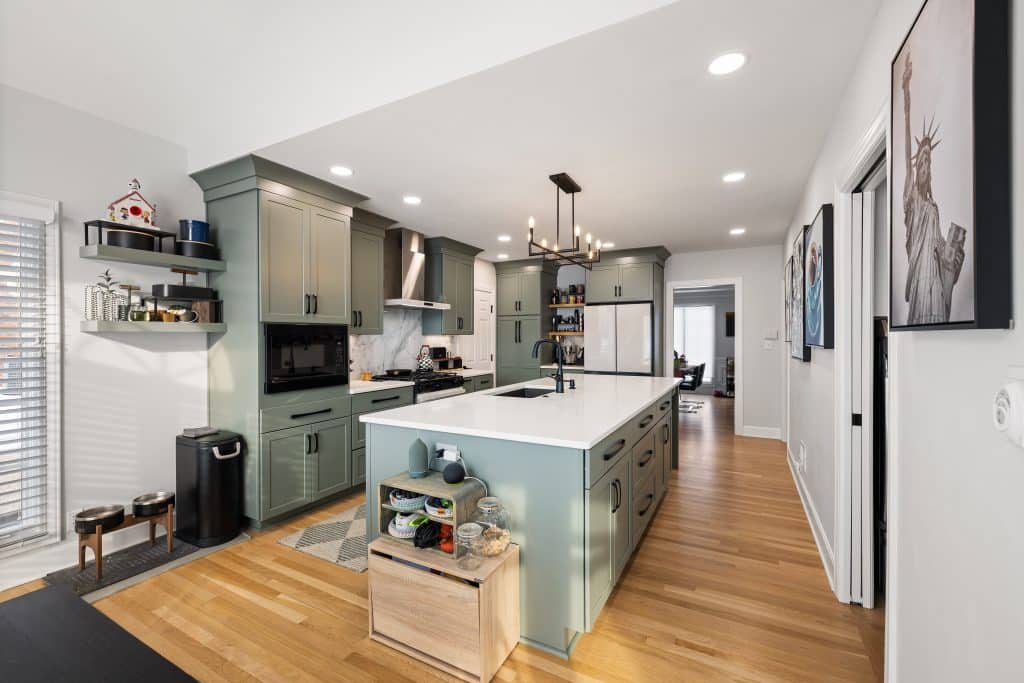
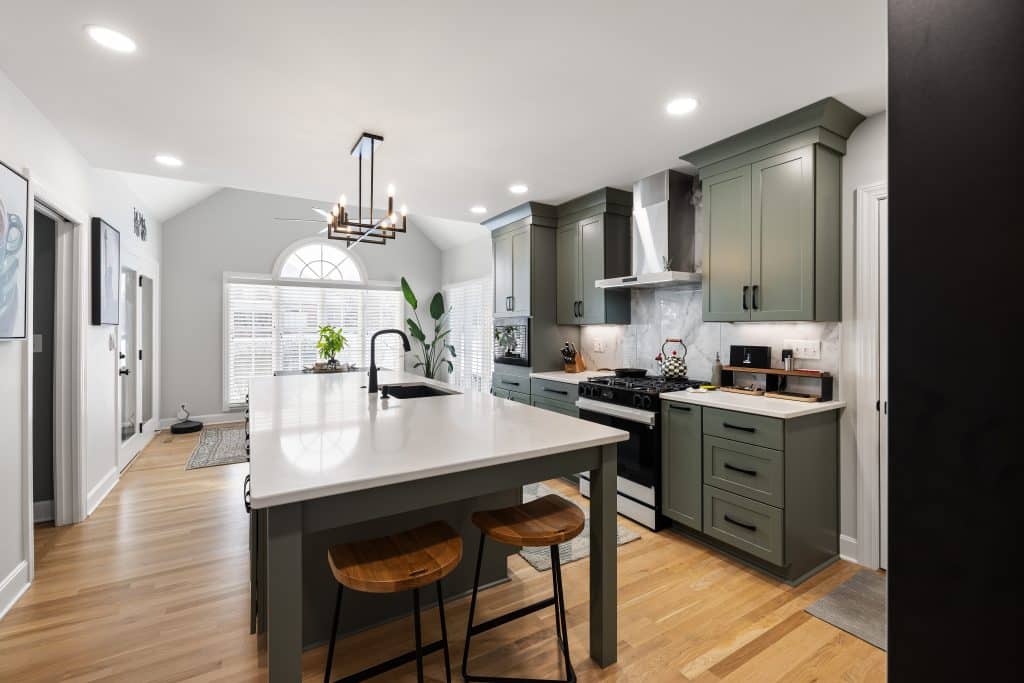
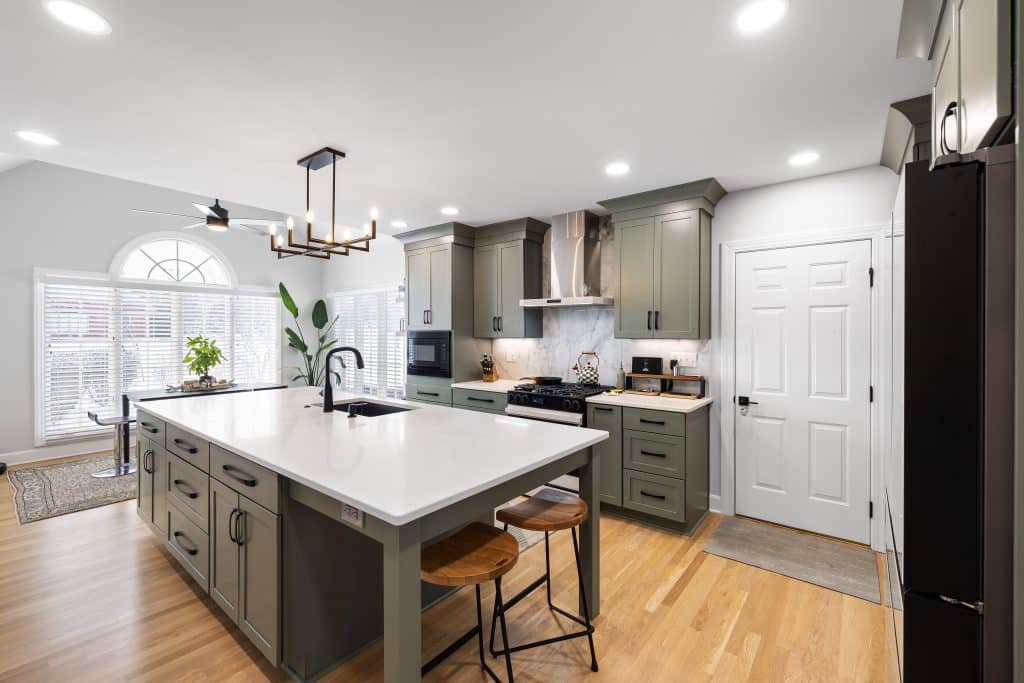
✅ After Photos
This is the result. Same kitchen. Same square footage. Completely transformed, by the same design process described above, and built by our Craftsmen with care, precision, and pride.

FAQs
How much does the design phase cost at Louisville Handyman & Remodeling?
The design fee is 4% of the estimated project cost, which reflects the level of detail and coordination involved in the full design process, including architectural layouts, 3D renderings, cost estimating, trade partner work instructions, and everything in between.
Do I own my design plans?
Yes. Once the design is complete and the design fee is paid, the plans are yours to keep. They’re not full construction documents, but they include a dimensioned layout that belongs to you regardless of whether or not you move forward with Louisville Handyman & Remodeling for the build.
How long does a remodel take in Louisville, KY?
The schedule is managed on a first-come, first-served basis, so signing your contract as early as possible is the best way to secure an earlier start date. While timelines vary depending on scope and current workload, smaller projects may fall on the shorter end of the construction window, with larger or more complex projects typically requiring more time. Occasionally, openings in the schedule do arise, which could allow for an earlier-than-expected start.
When will I know my project start date?
Start dates are assigned after contract signing on a first-come, first-served basis. You won’t have a confirmed start date at the time of signing. It depends on where you fall in the active queue and which Craftsman is the best fit for your project.
Will my project require permits and inspections?
Yes. Any project that involves new electrical, new plumbing, or structural changes requires permits before work begins. Mid-project inspections are also part of the process and can pause active construction for up to two weeks. Louisville Handyman & Remodeling handles all permitting on your behalf and makes sure every project is completed in full compliance.
How much say do I have over the design?
Total say. The design is yours from start to finish. Our designer begins with exactly what you’ve asked for and builds from there. She’ll offer alternatives and share her honest opinion, but she doesn’t impose her taste on your home. If something isn’t working for you, she genuinely wants to hear it.
Ready to Transform Your Louisville Home?
The remodeling design process at Louisville Handyman & Remodeling comes down to one thing: Higher Standards, Better Results. From the first conversation with Joe to the final walkthrough with our production manager, you’ll have an experienced team, a process built around transparency, and a designer who understands that a great kitchen isn’t just beautiful. It fits the way you actually live.
If you’re ready to talk about your remodel in Louisville, Kentucky or Southern Indiana, click here to give us a call. The phone starts ringing earlier every season. Be smart, call now.